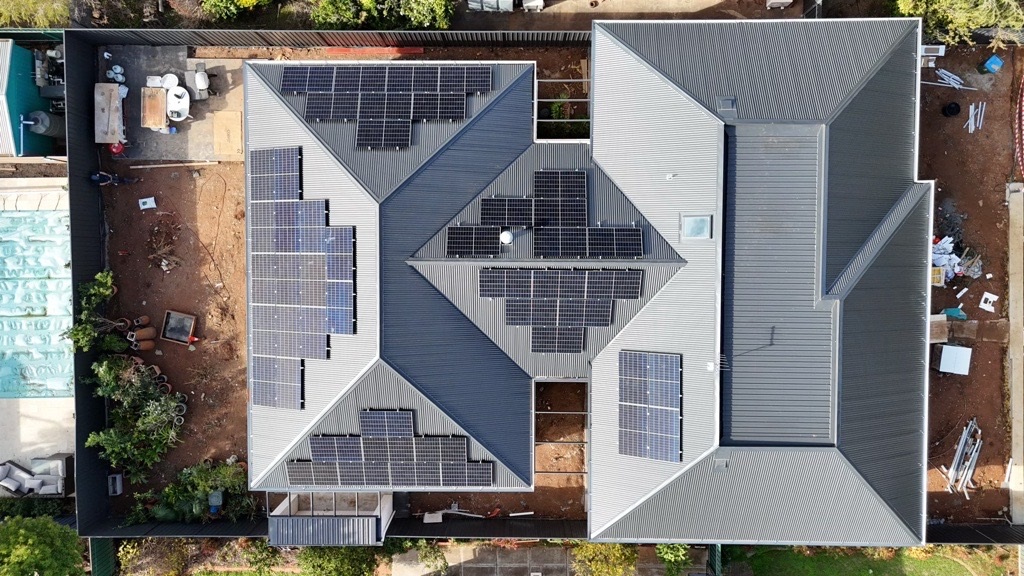
Solar Payback Period in Adelaide: 2026 Guide
Installing solar is a long-term investment, so one of the first questions Adelaide homeowners and businesses naturally ask is:
“How long will it take for my solar system to pay for itself?”
This is known as the solar payback period.
The good news is that solar can significantly reduce the amount of electricity you need to purchase from the grid. But there isn't one universal payback period for every property. Your result depends on the system cost, electricity usage, solar generation, feed-in tariff, energy prices, system size and how much of your solar power you use yourself.
For Adelaide homeowners considering residential solar solutions in 2026, understanding these factors is more useful than relying on a generic “X-year payback” claim.
What Is the Solar Payback Period?
The solar payback period is the estimated time it takes for the financial savings and benefits generated by your solar system to equal the amount you initially invested.
A simple way to understand it is:
Solar Payback Period = Total Solar Investment ÷ Annual Financial Benefit
For example, if a system costs $10,000 and delivers an average financial benefit of $2,000 per year, the simple payback period would be approximately five years.
However, real-world solar calculations are more complicated. Your annual benefit can change depending on electricity prices, your household consumption, solar generation, maintenance, feed-in tariffs and future energy usage.
The Australian Government's energy guidance also notes that actual payback depends on factors including weather, maintenance costs and future electricity prices.
Why Adelaide Is a Strong Location for Solar
Adelaide has excellent conditions for rooftop solar, but sunlight alone doesn't determine your payback period.
One of the biggest advantages is the amount of solar energy that can be generated during daylight hours. If your household or business can use a significant portion of that electricity while the system is producing it, you can avoid buying as much power from the grid.
This is important because self-consumption can be more valuable than exporting surplus electricity.
The Australian Government specifically notes that the greatest savings generally come from using the electricity generated by your solar system yourself.
For Adelaide households, this makes smart energy use just as important as the number of solar panels homeowners install.
What Determines Your Solar Payback Period?
Several factors can make your payback period shorter or longer.
1. The Upfront Cost of Your Solar System
The first factor is obvious: how much you pay for the system.
A high-quality system may have a higher initial cost than a budget installation, but you shouldn't judge a system purely by its purchase price.
Panel quality, inverter reliability, system design, installation workmanship and warranty support can all influence long-term value.
The Australian Government's Small-scale Renewable Energy Scheme (SRES) can reduce the upfront cost of eligible rooftop solar systems through Small-scale Technology Certificates (STCs).
Your installer will generally apply the STC value as an upfront discount, subject to eligibility requirements.
2. Your Household's Electricity Usage
Your energy consumption has a major impact on your payback period.
A household that regularly uses electricity during the day may be able to consume a large portion of its solar generation directly.
For example, you might use solar electricity for:
- Air conditioning
- Washing machines and dishwashers
- Pool pumps
- Home offices
- Hot water systems
- Other daytime appliances
The more solar electricity you use instead of buying it from the grid, the greater the potential bill savings.
3. Your Solar System Size
Choosing the right system size is important.
Installing more solar panels in Adelaide doesn't automatically mean a faster payback.
Your installer should consider your:
- Historical electricity consumption
- Roof space
- Roof orientation
- Shading
- Daytime energy usage
- Future electricity needs
A system that's properly sized around your actual usage can provide a better balance between upfront cost and long-term savings.
Feed-In Tariffs Also Matter
When your solar system generates more electricity than your property is using, the excess can generally be exported to the grid.
Your electricity retailer may provide a feed-in tariff for this exported electricity.
However, these rates vary between retailers and electricity plans.
The South Australian Government explains that retailer feed-in tariffs are set by individual retailers and can be influenced by factors such as wholesale electricity prices and market competition.
This is why you shouldn't calculate your payback based solely on the advertised feed-in tariff.
Your actual savings depend heavily on how much electricity you consume directly.
Self-Consumption Can Improve Your Payback
Imagine your solar system generating plenty of electricity between 10am and 3pm.
If you're using that electricity to run your air conditioner, appliances or pool pump, you're avoiding purchasing that electricity from your retailer.
That's generally more valuable than exporting the same electricity and receiving a feed-in payment.
This is why energy habits can make such a difference.
Simple changes such as running high-energy appliances during the day can help increase solar self-consumption and potentially improve the financial return from your system.
South Australia's Energy Advisory Service similarly recommends focusing on daytime self-consumption and shifting appliance use to make better use of solar generation.
What About Battery Storage?
A solar battery storage can help you use more of your solar energy after sunset.
During the day:
Solar panels → Home → Battery
At night:
Battery → Home
This can reduce the amount of electricity you need to purchase from the grid.
However, adding a battery changes the financial calculation.
The Australian Government notes that a battery generally takes longer to pay back than a solar-only system and may not always pay for itself within its lifetime.
That doesn't mean batteries aren't worthwhile.
Homeowners may also value batteries for:
- Backup power
- Greater energy independence
- Higher solar self-consumption
- Reducing grid electricity purchases
The key is to assess the battery based on your actual energy usage rather than assuming it will automatically shorten your solar payback period.
Residential Solar Adelaide: What Homeowners Should Consider
For residential solar Adelaide homeowners, your lifestyle can have a surprisingly large impact on financial performance.
For example, two homes with identical solar systems could have very different savings.
Home A
The occupants are home during the day and run appliances while the sun is shining.
They consume a large percentage of their solar generation.
Home B
Everyone leaves for work and school during the day.
Most electricity is consumed after sunset.
Home A may achieve greater immediate savings because more of its solar generation is being self-consumed.
This is why a professional assessment should consider when you use electricity, not simply how much you use.
What About Commercial Solar Adelaide?
The same principle applies to Commercial solar Adelaide, but businesses can have an additional advantage: many operate during daylight hours.
Offices, warehouses, retail businesses, manufacturing facilities, farms and other commercial properties may consume significant amounts of electricity while solar panels are generating power.
That can create strong opportunities for self-consumption.
A commercial system should therefore be designed around:
- Business operating hours
- Electricity demand
- Peak loads
- Roof space
- Seasonal usage
- Future expansion
For larger businesses, the financial assessment should also consider demand charges, tariff structures and operational changes.
How to Calculate Your Own Solar Payback Period
You don't need to rely on a salesperson's estimate.
Start by finding out:
1. Your total system cost
Include the installed price after applicable incentives or discounts.
2. Your expected annual solar generation
Your installer should provide an estimate based on the system design and location.
3. Your electricity consumption
Look at your historical bills rather than guessing.
4. Your self-consumption rate
Estimate how much solar electricity you'll use directly.
5. Your feed-in tariff
Check the actual offer from your electricity retailer.
6. Your future energy needs
Consider EV charging, battery storage, air conditioning or other changes.
Don't Trust Unrealistic Payback Promises
Be cautious if a solar salesperson promises an extremely short payback period without asking about your electricity usage.
A credible calculation should explain its assumptions.
Ask:
- What electricity price was used?
- What feed-in tariff was assumed?
- How much solar self-consumption was estimated?
- Was system degradation considered?
- Were maintenance costs included?
- Was the calculation based on my actual electricity bills?
South Australia's government guidance specifically recommends checking that the energy costs and feed-in tariffs used to calculate your payback period are relevant to your situation.
Solar Payback Is Only Part of the Story
Payback period is useful—but it shouldn't be the only metric you consider.
A solar system can continue generating electricity long after the initial investment has been recovered.
For example, if a system has a six-year payback period and continues operating for many more years, the electricity generated after that point can represent substantial additional value.
That's why it's worth looking at the total lifetime value of the system rather than focusing exclusively on the number of years until payback.
What Is Changing for Adelaide Homeowners in 2026?
There's another development worth considering when looking at household energy economics.
From 1 July 2026, eligible South Australian households with smart meters can access the Australian Government's Solar Sharer Offer, which provides a three-hour free electricity period from 12pm to 3pm. Households can use up to 24 kWh during the free period before an additional charge may apply.
This doesn't make rooftop solar unnecessary. Instead, it reinforces the importance of understanding when you use electricity.
For homeowners considering solar, batteries or both, your electricity plan and energy habits should be included in the financial calculation.
Why Choose AR Energy for Adelaide Solar?
Calculating the potential return of solar starts with choosing the right system and installer.
At AR Energy- Best Solar Company in Adelaide, the focus is on designing solar solutions around the property's actual energy requirements rather than simply recommending a standard package.
AR Energy has completed 10,000+ installations across SA and WA, along with 3,000+ battery installations, and is a 4× SunWiz Award Winner in 2026. The company also holds a 4.9-star SolarQuotes rating from 200+ reviews and is a CEC Accredited Retailer.
The goal is to help homeowners and businesses understand the numbers behind their investment—including system size, energy generation, self-consumption and long-term savings.
Final Thoughts
For many Adelaide homeowners and businesses, solar can be a strong long-term investment.
But there is no single solar payback period that applies to everyone.
Your result depends on your system cost, electricity consumption, solar generation, self-consumption, feed-in tariff, energy prices and future usage.
Instead of choosing a solar system based on an advertised payback number, look at the complete picture.
The right solar system isn't necessarily the cheapest system or the biggest system. It's the system that works best for your energy needs and delivers value over its lifetime.
👉 Want to Know Your Potential Solar Payback Period?
Speak with AR Energy for a tailored assessment of your Adelaide home or business.
Get a system recommendation based on your energy usage, property and future goals—so you can make your solar investment with confidence.
FAQs
What is the average solar payback period in Adelaide in 2026?
There isn't a single average that applies to every Adelaide property. The solar payback period depends on system cost, electricity prices, solar generation, household energy consumption, self-consumption and feed-in tariffs. A personalised calculation using your actual electricity usage will provide a more meaningful estimate.
Does using more solar electricity during the day improve payback?
Yes. Using solar electricity directly can improve the financial value of your system because you're avoiding purchasing electricity from the grid. Running appliances such as washing machines, dishwashers, pool pumps and air conditioning during periods of solar generation can increase self-consumption.
Contributors
.jpg)

Ready to make the switch to sustainable enegery?
Contact AR Energy for a free consultation and start your journey towards energy independence today!