Three Hours of Free Electricity Could Charge Your EV—But How Much?
For many Adelaide homeowners, charging an electric vehicle at home is one of the easiest ways to reduce reliance on petrol and make better use of household energy. But what if you had access to three hours of free electricity every day? How much could you actually put into your EV during that window?
The answer depends on your EV charger, vehicle battery, charging speed and electricity plan. In some cases, three hours can add a meaningful amount of driving range. With a suitable home EV charger, it could be enough to cover several days of typical driving.
Let’s break down what three hours of free power could really mean for EV owners in Adelaide.
What Does Three Hours of Free Electricity Mean?
Australia has energy offers designed to encourage households to use electricity when demand is lower. One example is the Solar Sharer Offer, which provides eligible households with up to 24 kWh of free electricity during a three-hour daily window. The exact availability and conditions depend on the household and energy retailer.
For an EV owner, this creates an interesting opportunity: instead of charging your car during a higher-cost period, you could potentially plug it in during the free window and use that electricity to add range.
However, free electricity doesn't mean your EV will automatically take 24 kWh. Your car and charger determine how much energy can actually be transferred in three hours.
How Much Can an EV Charge in Three Hours?
The simplest way to estimate this is:
Charging energy = charger power × charging time
For example:
- A 2.4 kW standard power point could theoretically deliver around 7.2 kWh in three hours.
- A 7 kW home EV charger could theoretically deliver around 21 kWh.
- An 11 kW charger could theoretically deliver around 33 kWh.
- A 22 kW charger could theoretically deliver around 66 kWh, although the vehicle itself may not accept 22 kW.
These are theoretical figures. Real-world charging can be lower because of charging losses and because the vehicle controls its charging rate.
Australian Government guidance says standard household power points provide up to 2.4 kW, while dedicated Level 2 home chargers generally provide between 7 and 22 kW.
So, if you have a 7-kW EV charger and can use the entire three-hour free period, around 21 kWh could potentially be supplied to the vehicle.
What Does 21 kWh Mean for Your Driving Range?
This is where things get more interesting.
EV efficiency varies between models. A smaller, efficient EV might use around 13–16 kWh per 100 km, while a larger SUV could use considerably more.
As a simple example, if your EV averages 15 kWh per 100 km, adding 21 kWh could provide roughly:
21 ÷ 15 × 100 = 140 km of driving range
That doesn't mean every 7 kW charger will give you exactly 140 km. Your vehicle's efficiency, battery temperature, charging losses, driving conditions and charging state can all affect the result.
Still, it shows why a three-hour charging window can be valuable.
For context, the Australian Government says the average Australian drives around 33 km per day.
That means a well-timed three-hour home charging session could potentially replace several days of typical driving energy for some EV owners.
What If You Only Use a Standard Power Point?
You don't necessarily need a dedicated home EV charger to charge an EV.
A standard 240V power point can charge an EV at up to 2.4 kW. Over three hours, that works out to approximately 7.2 kWh before accounting for losses.
Using the same 15 kWh/100 km efficiency example, that could represent roughly 48 km of theoretical range.
For someone with a short daily commute, that may be enough.
However, a standard power point is significantly slower than a dedicated charger. If you regularly drive longer distances or want to make the most of a short free-power window, a dedicated home charging setup can be much more practical.
Why a Home EV Charger Can Make a Difference
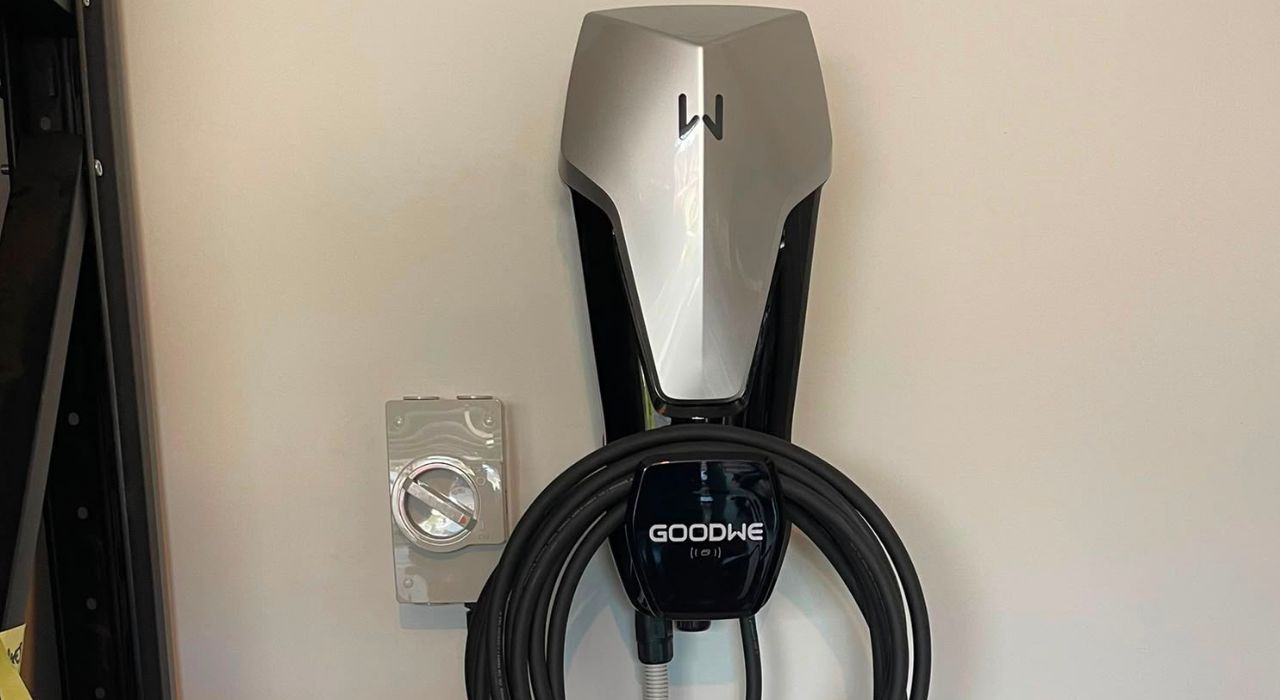
A dedicated home EV charger can provide considerably more charging power than a standard outlet.
A typical 7 kW Level 2 charger can potentially deliver around 21 kWh during three hours. That's nearly three times the theoretical energy of a 2.4 kW standard outlet over the same period.
The advantage isn't simply speed. A smart home charger can also help you schedule charging around your electricity plan, solar generation and household energy use.
For Adelaide homeowners with rooftop solar, this can be particularly useful.
The South Australian Government recommends considering charging an EV during the middle of the day when solar generation can be high. Using excess solar electricity to charge an EV can increase self-consumption and reduce the amount of energy exported to the grid.
What About Solar Panels?
If your Adelaide home already has solar panels, your three-hour charging window may become even more valuable.
Rather than thinking only about "free electricity", consider the bigger picture:
Solar generation → home appliances → EV charging → battery storage
If your solar system is producing more electricity than your home is using, your EV can act as another useful load.
For example, if you're home during the day and your solar system is generating strongly, you could use a smart EV charger to direct some of that excess energy into your vehicle.
This can be particularly attractive for homeowners who want to get more value from their existing solar investment.
Does Every EV Charge at the Same Speed?
No.
Even if you install a 22 kW home charger, your EV may not be capable of accepting 22 kW of AC charging power.
Charging speed depends on several factors, including:
- Your vehicle's maximum AC charging rate
- The power rating of the charger
- Your home's electrical supply
- The battery's state of charge
- Battery temperature
- The vehicle's charging management system
The Australian Government notes that charging speed depends on both the charger and the vehicle, as well as factors such as battery temperature and state of charge.
That's why choosing a charger should start with understanding your EV rather than simply buying the highest-powered option available.
Is Three Hours Enough for Your EV?
For many Adelaide households, yes—but it depends on how much you drive.
If you only drive 20–40 km most days, you may not need to fully recharge your battery every day. A few hours of charging can easily replace the energy you've used.
If you frequently travel long distances, you'll need to consider your EV's battery capacity, efficiency and charging speed.
The good news is that you generally don't need to charge an EV from empty to full every time. For everyday driving, topping up the battery regularly can be much more convenient.
Make Your Free Electricity Work Harder
Three hours of free electricity could be much more useful than it first appears.
With a standard power point, you might add around 7 kWh during three hours. With a 7 kW home EV charger, you could potentially add around 21 kWh, subject to your vehicle and charging conditions.
For an efficient EV, that could translate into well over 100 km of potential driving range.
For Adelaide homeowners, the bigger opportunity is combining EV charging, solar power and smart energy management. South Australia already has a strong focus on shifting electricity use towards periods of abundant renewable generation, and current state programs include provisions for smart control of residential EV chargers.
Final Thoughts
Three hours of free electricity could be particularly valuable for Adelaide homeowners who own an EV.
The Solar Sharer Offer gives eligible South Australian households a daily 12 pm–3 pm free-power window, with up to 24 kWh available without usage charges.
Pairing that opportunity with a suitable home EV charger can make it much easier to put that free electricity to work.
For many drivers, a 7 kW charger could deliver around 21 kWh during the three-hour window—potentially enough to cover a substantial amount of daily driving.
Before installing an EV charger, however, check your EV's charging capacity, your home's electrical setup and the terms of your electricity plan. A licensed electrician should assess and install a dedicated charger where required.
Ready to Charge Your EV Smarter?
If you're considering EV charging at home, AR Energy can help you understand your options and choose a charging solution suited to your EV, home and energy usage.
A properly planned home charging setup can help you make better use of solar generation, cheaper electricity periods and your vehicle's charging capabilities.
FAQs
How much can an EV charge in three hours?
It depends on the charger. A 7 kW home EV charger could theoretically deliver around 21 kWh in three hours, although actual charging may vary.
Can I charge my EV for free during the three-hour electricity window?
Eligible South Australian households can access up to 24 kWh of free electricity during the designated three-hour period under the Solar Sharer Offer, subject to its terms and conditions.
Contributors
.jpg)

Ready to make the switch to sustainable enegery?
Contact AR Energy for a free consultation and start your journey towards energy independence today!