
Everything You Need to Know About Agribusiness Solar in South Australia
South Australia's agricultural industry has always been built on innovation. From advanced irrigation systems to precision farming technologies, today's farmers are constantly looking for smarter ways to improve productivity while managing operating costs. One solution that's rapidly gaining momentum is agribusiness solar in South Australia.
Energy is one of the largest ongoing expenses for many farms and rural businesses. Whether you're running irrigation pumps, refrigeration units, dairy equipment, grain handling systems, wineries or livestock operations, electricity costs can quickly add up. Installing a solar system allows agribusinesses to generate their own clean energy, reduce reliance on the grid and gain greater control over rising power prices.
If you're considering agribusiness solar SA, here's everything you need to know before making the investment.
Why Agribusiness Solar Makes Sense in South Australia
South Australia enjoys some of the highest solar radiation levels in Australia, making it an ideal location for commercial solar generation.
Unlike residential properties, farms often consume large amounts of electricity during daylight hours—exactly when solar panels produce the most energy. This means more of the electricity generated is used directly on-site, maximising savings and improving the return on investment.
Agribusinesses can benefit from solar by:
- Reducing electricity bills
- Protecting against rising energy prices
- Lowering operating costs
- Improving long-term business sustainability
- Increasing energy independence
- Supporting environmental goals
For many South Australian farms, solar isn't simply an environmental decision—it's a smart financial investment.
What Is Agribusiness Solar?
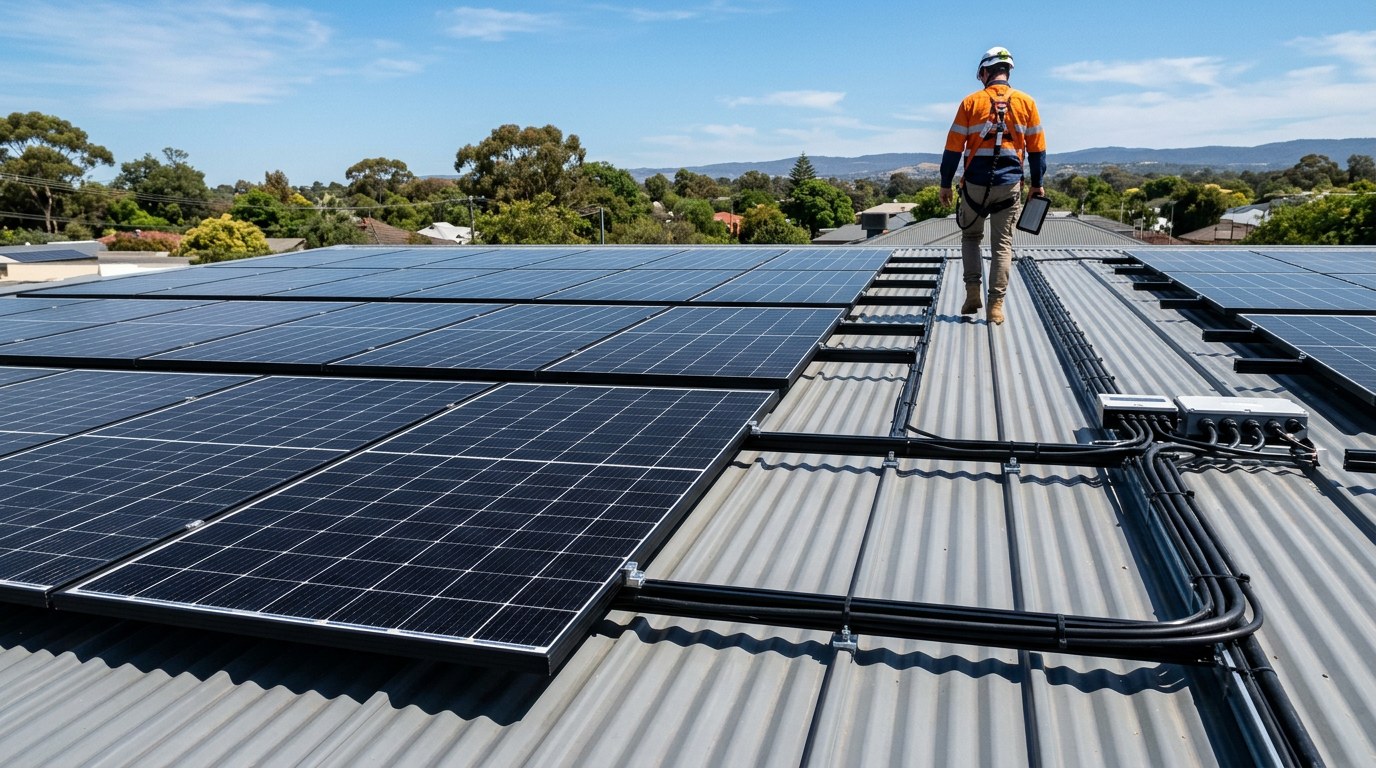
Agribusiness solar refers to commercial-scale solar power systems specifically designed for agricultural operations.
Unlike standard residential systems, these installations are tailored to match the unique energy demands of farms, including:
- Irrigation pumps
- Dairy sheds
- Cold storage facilities
- Grain silos
- Poultry farms
- Livestock operations
- Vineyards and wineries
- Packing sheds
- Machinery workshops
Every farm operates differently, which is why professional system design is essential to maximise energy production and savings.
Which Farms Benefit Most from Agribusiness Solar?
Almost every agricultural business that uses electricity during the day can benefit from solar.
Some of the industries seeing excellent returns include:
Dairy Farms
Milking equipment, refrigeration and water heating require significant amounts of electricity. Solar helps offset these ongoing energy costs.
Vineyards & Wineries
From irrigation through to wine production and storage, vineyards have consistent daytime energy demand that aligns perfectly with solar generation.
Livestock Farms
Poultry, pig and cattle farms rely on ventilation systems, water pumps, feeding equipment and climate control—all ideal applications for solar.
Irrigated Cropping
Large irrigation pumps are among the biggest electricity users on many farms. Solar can substantially reduce pumping costs throughout the growing season.
Grain Farms
Grain drying, handling and storage equipment often require significant energy during harvest periods, making solar an attractive investment.
How Agribusiness Solar Works
The process is straightforward.
Solar panels capture sunlight and convert it into direct current (DC) electricity.
A commercial inverter then converts this into alternating current (AC), which powers your farm's equipment and buildings.
If your system generates more electricity than you're using, the excess may be exported to the grid depending on your network connection and energy retailer.
Many agribusinesses also choose to integrate battery storage, allowing excess solar energy to be stored and used after sunset or during peak electricity pricing periods.
Key Benefits of Agribusiness Solar in South Australia
Significant Energy Savings
Electricity prices continue to rise across Australia. Producing your own renewable energy can dramatically reduce your monthly operating expenses.
For businesses with high daytime electricity usage, savings can be substantial over the lifetime of the system.
Better Cash Flow
Lower electricity bills mean more money stays within your business.
Those savings can be reinvested into equipment, staff, expansion or future improvements.
Protection from Rising Electricity Prices
Wholesale electricity prices fluctuate regularly.
Solar provides greater certainty by allowing you to generate much of your own energy rather than relying solely on the grid.
Low Maintenance
Commercial solar systems require very little maintenance.
With occasional inspections and cleaning, quality systems continue operating efficiently for decades.
Environmental Benefits
Solar energy reduces greenhouse gas emissions and supports more sustainable farming practices.
Many consumers increasingly value businesses that actively reduce their environmental impact.
Is Battery Storage Worth Considering?
Battery storage isn't essential for every farm, but it can provide additional benefits depending on your energy usage.
Battery systems are particularly useful if your business:
- Operates after sunset
- Experiences power outages
- Wants greater energy independence
- Has significant excess solar production
- Uses high electricity during evening hours
A professional energy assessment can determine whether battery storage will provide a worthwhile return for your operation.
How Much Does Agribusiness Solar Cost?
There isn't a one-size-fits-all price.
The total investment depends on factors such as:
- Farm size
- Daily electricity usage
- System capacity
- Roof space or ground-mounted installation
- Battery storage requirements
- Electrical infrastructure upgrades
While larger systems require a greater upfront investment, they often deliver stronger long-term financial returns due to higher energy savings.
Rather than focusing solely on installation cost, it's important to evaluate the lifetime value and return on investment.
Choosing the Right Agribusiness Solar Installer
Not all solar installers have experience working with agricultural businesses.
Look for a provider that:
- Understands commercial farming operations
- Designs customised solar solutions
- Uses quality Tier 1 equipment
- Provides ongoing support and maintenance
- Offers transparent pricing
- Has proven experience with commercial solar projects
A properly designed system should be based on your actual energy usage—not simply the available roof space.
Is Your Farm Ready for Solar?
Your property may be an excellent candidate for agribusiness solar if you:
- Have high electricity bills
- Operate mainly during daylight hours
- Have suitable roof or land space
- Plan to stay on the property long-term
- Want greater control over energy costs
- Are looking to improve business sustainability
Even if your farm already has solar installed, upgrading or expanding your system may provide additional savings as your business grows.
Why Choose AR Energy for Agribusiness Solar in South Australia?
At AR Energy, we understand that every agricultural business has different energy requirements.
Our experienced team designs tailored solar solutions that help South Australian farms reduce electricity costs, improve operational efficiency and maximise long-term returns.
From the initial consultation through to installation and ongoing support, we focus on delivering high-quality systems backed by honest advice and reliable service.
Whether you operate a vineyard, dairy farm, livestock business or cropping enterprise, we'll help you determine the right solar solution for your needs—without unnecessary upselling or guesswork.
Final Thoughts
As energy prices continue to increase, investing in agribusiness solar in South Australia has become one of the smartest long-term decisions many South Australian farmers can make.
With abundant sunshine, proven technology and strong potential savings, solar allows agricultural businesses to lower operating costs while improving energy independence and sustainability.
If you're considering agribusiness solar, the best place to start is with a professional assessment of your current energy usage. A well-designed solar system can deliver decades of reliable performance and help future-proof your farming business for years to come.
FAQs
1. Is agribusiness solar worth it in South Australia?
Yes. With abundant sunshine and high daytime energy usage, most South Australian farms can significantly reduce electricity costs and improve long-term energy independence with a properly designed solar system.
2. What types of farms benefit most from agribusiness solar?
Dairy farms, vineyards, wineries, livestock operations, irrigated cropping, grain farms, poultry farms, and packing facilities all benefit from agribusiness solar because they consume substantial electricity during daylight hours.
3. Can I add battery storage to my agribusiness solar system?
Absolutely. Battery storage allows excess solar energy to be stored for use during the evening, overnight, or power outages, making it a valuable option for farms with extended operating hours or backup power needs.
Contributors
.jpg)


Ready to make the switch to sustainable eneRGy?
Contact AR Energy for a free consultation and start your journey towards energy independence today!